I've been wanting to do this for awhile; weblinks to useful, helpful online sites and aritcles. I'm always running into article or info that I want to share directly, not reinterpreted by me into a blog post, but send you directly to the article.
Here are some from today:
Plant totems
Good article on Yarrow for kids- no tinctures, just a fever tea!
Also- I've just completed the best Boo Boo salve around! (I know- lots of people make salve. I'm not judging, just giving myself a cheerleader rah-rah!). It includes infused calendula oil- handmade from my own calendula (organic from seed to flower). Infused comfrey oil- from Hal's famous stock of comfrey that grows all over our property. Infused rosemary oil- a unique oil that is often overlooked, made from my own home grown plant stock as well. St. John's wort oil- commercially made, organic. Olive oil, almond oil and coconut oil and local, lovingly gathered beeswax (from Richard Bean's bees). Minimal essential oil: clove and rosemary.
What sets this salve apart? Local wax from a local producer. Locally grown and hand gathered herbs. Rosemary oil- it's powerful and overlooked. Coconut oil- I cannot get over the anti-bacterial qualities of this oil that is GREAT FOR KIDS! Minimal essential oils. This is controversial but my opinion from my research and experience is that essential oils are really powerful and best used in very small doses. I have used a few drops, as listed above. But these are to ameliorate the stinky comfrey oil- ha ha!
Pictures to come....
Hal's Hat

Friday, November 16, 2012

Thursday, November 15, 2012
Fall roots and shoots- burdock and dandelion
Disclaimer: Do not pick any plant that you cannot identify 100%. Ask an herbalist to help you. Never pick or dig any shoot or root that might have been sprayed with chemicals. Be careful where you dig roots, since roots can absorb any chemicals near the ground (like lead paint, motor oil or the like).
Sorry for the huge space between posts- it seems that I get caught up in online discussions of herbs/ herbal uses/ advice and then feel like I've expressed all that I wanted to say on a topic. However- this is what I've been cooking up, herbally speaking:
It's Burdock root time! I love cool fall because it's really time to dig roots. I get the yen to have burdock at the most awkward times of year- early spring (don't dig roots at this time), late summer (really don't dig roots now). Then- poof, it's Samhain and it's chilly and I take a break and find burdock. Or rather burdock finds me. Burdock is one of those allies of mine that my dad had no experience or calling towards. He knew about it but only ever offered it to anyone in pill form (nonononono). I asked about it, told him about my research and he found some (without me: I was in college and 23 or something). He made a tincture and I took it with me to Europe. My skin magically cleared up- burdock? or non-processed food? Or adventure?
When I found burdock for myself, I was in my '20s and living in semi-rural WyCo. It appeared in some fields around me and my dad identified it with me. I then found it in my trusty Susun Weed library and was energetically magnetized!
Aside: my relationship with my herbal allies is a casual one. Some seasons, I pay no attention.They tolerate that and my body probably suffers the loss a bit. But when I tune back in to my needs psychically, physically, the herbal allies pop right back to the front of my mind. This is more a reflection of my state of being, rather than the herbs "power" or something. It's just "my trip" as Hal would say.
In the past, I have been a very steady burdock tincture advocate. It has a deep brown, nutty flavor. When it is tinctured, the root gets chopped up and soaked in 100 proof vodka, just like all my other tincture. In order to get the slow-acting benefits, it needs to be taken orally once-twice a day (droppersful) for awhile.
Do you see an issue? I do. I don't want to take droppersful of vodka tincture every day for 6 weeks. The alcohol really isn't good for you in the long term (not in the tender tissues of your mouth or gums or tongue). As well, in aging, I've rediscovered how much I need vitamins/ minerals and green food daily and in much larger doses than I might normally eat. Susun Weed is adamant about the nutritive aspects of burdock. In China, it's Gobo root and is eaten. It is vastly healthy and affects the lymph system and liver directly. So, I've made the change this year: burdock vinegar. I'm doing it.... this Virgo is breaking from her plodding path. Burdock vinegar is made by thoroughly soaking the dug root in water. Don't really wash it- just let all the dirt soak away. The chop it up into small pieces and fill a quart jar. When you've filled it to the brim, then pour in your apple cider vinegar. I used to use only unpasteurized vinegar with the mother still in it. Now I use the pasteurized stuff since most of the vinegar I have is used in soups and hot liquids, thus pasteurizing it!

So I went out with my older girl to dig for burdock. A chilly and cool morning is perfect for it.... Burdock grows in the least friendly places to dig, as a rule. It likes shallow, rocky areas and loves to grow in between sidewalks and a rock wall. Sheeesh. But the roots we found on this trip were pretty accessible. We found both small and extra large. It was strange! Roots as big around as my wrist with very little green material. I suspect those are 2nd year, but were mown over and unable to work up to a bloom. Burdock is a biennial and only live 2 years. So its first year is supposed to be preferable to its 2nd year. I = not too picky.

And then Myrna says, "Mom, let's pick dandelion." She's big into the greens, above ground. Now, not really eating it, per se. She is not a green vegetable gal. But she likes to pick stuff outside and eat it. Spring is the best time to pick dandelion greens because, in cool weather, all the energy goes to the roots, leaving the greens mild. It also means that it's a good time for dandelion root. I've been meaning to dig dandelion root for years. I love the greens and fully recognize the huge benefit the root offers. It is a kidney healer, great for liver function, the greens are HIGH in vitamin C and it all helps bile production and stomach issues (ulcers, digestive upset, etc). This fall, I've actually completed my task!
I've decided to make a tincture of this. I anticipate the usage being more critical- you've decided to take hormones and want to support your renal system and liver while you do. Take dandelion tincture as needed or daily for 2 weeks. You are working to support your gall bladder because you fear you might have to have it removed. You eat too much processed food and your gall bladder, kidneys and liver are MAD. This will help, along with fresh, unprocessed food. Dandelion is great if you are transitioning, under going a sex change or doing HRT. Men taking testosterone are seriously taxing their systems for years at a time (women taking estrogen are too. See all the hoopla about why HRT is dangerous!). While I do not think there are seriously effective ways to naturally transition from MTF or FTM, I really encourage my friends who are transitioning to take care of their organs. We don't know the long term repercussions of taking hormones. Well, we do. They aren't great. But living with body dismorphism? Total hell. So the long term stress on your liver seems pretty-damn-worth-it. To any folks who want further information about herbs and natural ways to support yourself while transitioning, private message me. I'm a proud ally to the GLBTQ community and want to lend my support where I can.
 Can we talk about gall bladders for a minute? Did you know that your gall bladder produces bile, which is required by your liver for processing and straining out all of the crap in our system? (That's the liver's function, BTW; to filter) When your gall bladder ceases producing bile, you will get massive pain when you try to digest greasy, fat rich and processed foods. It is at this point that many western doctors will recommend you get gall bladder surgery. You can guess that I might suggest some other options first, to stimulate your gall bladder.
Also, if you have chronic stomach pain, indigestion and take an antacid, you need to make friends with dandelion. Please. Get off the purple pill and talk to your lawn. I'll get back to you on this one- I don't want to lecture but I do want you to consider OTHER OPTIONS beyond pills. Why are folks with indigestion always the most stubborn? Riddle me this.
I want to keep this blog going and not exhaust myself by talking too much online. I like my blog topics and conversations which arise. However, if you have questions, please let me know! I need more interaction about what you are interested in. Facebook is perfectly fine for that too! Ask away. If it's personal, send me a message. If you want a full consultation or a weed walk, I'll charge you. Not much or we can do trade! But I can't give all my own energy away for free. I hope you understand and will give me back some of your energy. :)
Sorry for the huge space between posts- it seems that I get caught up in online discussions of herbs/ herbal uses/ advice and then feel like I've expressed all that I wanted to say on a topic. However- this is what I've been cooking up, herbally speaking:
It's Burdock root time! I love cool fall because it's really time to dig roots. I get the yen to have burdock at the most awkward times of year- early spring (don't dig roots at this time), late summer (really don't dig roots now). Then- poof, it's Samhain and it's chilly and I take a break and find burdock. Or rather burdock finds me. Burdock is one of those allies of mine that my dad had no experience or calling towards. He knew about it but only ever offered it to anyone in pill form (nonononono). I asked about it, told him about my research and he found some (without me: I was in college and 23 or something). He made a tincture and I took it with me to Europe. My skin magically cleared up- burdock? or non-processed food? Or adventure?
When I found burdock for myself, I was in my '20s and living in semi-rural WyCo. It appeared in some fields around me and my dad identified it with me. I then found it in my trusty Susun Weed library and was energetically magnetized!
 |
| Myrna helping with the big bucket |
In the past, I have been a very steady burdock tincture advocate. It has a deep brown, nutty flavor. When it is tinctured, the root gets chopped up and soaked in 100 proof vodka, just like all my other tincture. In order to get the slow-acting benefits, it needs to be taken orally once-twice a day (droppersful) for awhile.
 |
| Our friend "Sweetie Pie" in the background |

So I went out with my older girl to dig for burdock. A chilly and cool morning is perfect for it.... Burdock grows in the least friendly places to dig, as a rule. It likes shallow, rocky areas and loves to grow in between sidewalks and a rock wall. Sheeesh. But the roots we found on this trip were pretty accessible. We found both small and extra large. It was strange! Roots as big around as my wrist with very little green material. I suspect those are 2nd year, but were mown over and unable to work up to a bloom. Burdock is a biennial and only live 2 years. So its first year is supposed to be preferable to its 2nd year. I = not too picky.

And then Myrna says, "Mom, let's pick dandelion." She's big into the greens, above ground. Now, not really eating it, per se. She is not a green vegetable gal. But she likes to pick stuff outside and eat it. Spring is the best time to pick dandelion greens because, in cool weather, all the energy goes to the roots, leaving the greens mild. It also means that it's a good time for dandelion root. I've been meaning to dig dandelion root for years. I love the greens and fully recognize the huge benefit the root offers. It is a kidney healer, great for liver function, the greens are HIGH in vitamin C and it all helps bile production and stomach issues (ulcers, digestive upset, etc). This fall, I've actually completed my task!
I've decided to make a tincture of this. I anticipate the usage being more critical- you've decided to take hormones and want to support your renal system and liver while you do. Take dandelion tincture as needed or daily for 2 weeks. You are working to support your gall bladder because you fear you might have to have it removed. You eat too much processed food and your gall bladder, kidneys and liver are MAD. This will help, along with fresh, unprocessed food. Dandelion is great if you are transitioning, under going a sex change or doing HRT. Men taking testosterone are seriously taxing their systems for years at a time (women taking estrogen are too. See all the hoopla about why HRT is dangerous!). While I do not think there are seriously effective ways to naturally transition from MTF or FTM, I really encourage my friends who are transitioning to take care of their organs. We don't know the long term repercussions of taking hormones. Well, we do. They aren't great. But living with body dismorphism? Total hell. So the long term stress on your liver seems pretty-damn-worth-it. To any folks who want further information about herbs and natural ways to support yourself while transitioning, private message me. I'm a proud ally to the GLBTQ community and want to lend my support where I can.
 Can we talk about gall bladders for a minute? Did you know that your gall bladder produces bile, which is required by your liver for processing and straining out all of the crap in our system? (That's the liver's function, BTW; to filter) When your gall bladder ceases producing bile, you will get massive pain when you try to digest greasy, fat rich and processed foods. It is at this point that many western doctors will recommend you get gall bladder surgery. You can guess that I might suggest some other options first, to stimulate your gall bladder.
Also, if you have chronic stomach pain, indigestion and take an antacid, you need to make friends with dandelion. Please. Get off the purple pill and talk to your lawn. I'll get back to you on this one- I don't want to lecture but I do want you to consider OTHER OPTIONS beyond pills. Why are folks with indigestion always the most stubborn? Riddle me this.
I want to keep this blog going and not exhaust myself by talking too much online. I like my blog topics and conversations which arise. However, if you have questions, please let me know! I need more interaction about what you are interested in. Facebook is perfectly fine for that too! Ask away. If it's personal, send me a message. If you want a full consultation or a weed walk, I'll charge you. Not much or we can do trade! But I can't give all my own energy away for free. I hope you understand and will give me back some of your energy. :)
Tuesday, September 4, 2012
Fall container workshop... and plants, plants, plants!
 Hello everyone who might visit occasionally! I have fallen down on updating- because the job I love keeps me busy running my mouth and fingers about plants...so much so that I don't have a lot left for this spot.
 But here is what's happening on the herbal front: turning comfrey oil into salve.
Harvesting calendula blooms. I don't dry them as the lovely Mountain Rose Herb folks tell you to do.... we will see if they make good oil or if they are too wet/viscous.
Taking all my own motherwort tincture because it helps stabilize my hormones! Really helps with the PMS.
Coconut oil on all parts of the body.
Echinacea to tincture.
On the plant front: I'm holding a container garden workshop. Here is the pdf for the function. The main question for most folk: what do I put in my containers in the fall that will look good until frost (or very cold)? I have a few season straddling suggestions... my favorite plants!
I'm convening this through Lawrence Landscape- thanks, day job, for giving me room to be creative!

Jennifer Smith, our extension agent in Douglas County, wrote a fall container garden story about my suggestions for fall planting, etc! Thank you so much Jennifer. What a nice surprise!

Please RSVP if you would like to come to my class... XOXO!
Tuesday, July 10, 2012
Colic! And Probiotics!
I am so excited to link to this post.... partially because I am right. Let me say this again: natural medicine wins the day on this one, guys! The cause of colic (granted it's only in one study) has been linked to a bacteria or gut flora in a baby's gut. And the best way to deal with that???? PROBIOTICS!
I am really excited because I've been linking to this stuff for ages; recommending it to strangers and generally trying to get all mamas to put this in themselves if they aren't doing any bottle feedings but need to get this into a tiny, screaming infant body. Also, this can be mixed with a little warm water and dropper fed into the baby's mouth.
Here is the article! I understand it's tentative. But it also cannot hurt to start using probiotics in your own mouth before and after birth to balance your own gut flora. Birth is traumatic and C-sections/ hospital stays even more so....Here is my original post on the subject as well!
I wish you all very well and I hope your babe doesn't have colic. But it isn't your fault- it's just nature. Take some probiotics- for yourself and your little baby.
xoxox
Laurel
I am really excited because I've been linking to this stuff for ages; recommending it to strangers and generally trying to get all mamas to put this in themselves if they aren't doing any bottle feedings but need to get this into a tiny, screaming infant body. Also, this can be mixed with a little warm water and dropper fed into the baby's mouth.
Here is the article! I understand it's tentative. But it also cannot hurt to start using probiotics in your own mouth before and after birth to balance your own gut flora. Birth is traumatic and C-sections/ hospital stays even more so....Here is my original post on the subject as well!
I wish you all very well and I hope your babe doesn't have colic. But it isn't your fault- it's just nature. Take some probiotics- for yourself and your little baby.
xoxox
Laurel
Tuesday, June 26, 2012
big june, summer solstice, medicine making time....
I'm making Motherwort tincture this week (harvested on June 20). I'm making Yarrow tincture today or thereabouts. I'm cutting all the flowering comfrey for both infusions and infused oils. I'd love to make St. JOhn's Wort oil but have no medicinal SJW! Bah.
 Motherwort: she is calming and easing on the nerves. Great for PMS, menstrual issues (PMDD, PMS both) of bleeding too much and postpartum/natal emotional and physical issues. She is really, really bitter as a tea. So tincture allows the energy/ medicinal stuff to come through without the volume of really bitter infusion!
Harvest while in bloom, like the picture. A bit pokey. Look for the pointed leaves. Likes partial sun and will be in the green areas; in the alley, by the pathways.
*Note: made tincture this weekend. I couldn't get much motherwort, just enough for a pint jar. This will make 8 oz of heavy tincture though. If it generates any interest from others, I will make more!
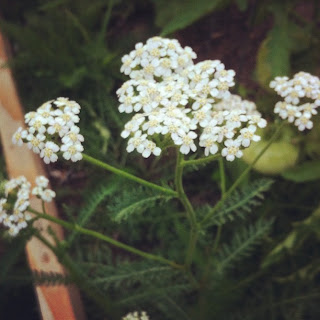 Yarrow: this is one my best buddies. I love this plant. It is native, beautiful in gardens and wonderful on the body. Helps nasty cuts stop bleeding immediately when applied as the crushed herb. (as in, "I cut myself!", grab some yarrow from the garden, roll it in your hand and press on your cut) Wonderful as a tincture because it fights serious flu viruses and brings my fever down quickly. I use the bloosom and leaves but leave the root. Interesting that many traditional herbalists call for digging the entire plant out.....I haven't ever done this for Yarrow. I also will be making salve (from infused oil) from Yarrow this year. I know that Comfrey (coming up next) and yarrow work so well together. With a beeswax and coconut oil base... should be a big skin eruption healer. (Also, the prettily colored yarrow is for garden use only, not for medicine. The white is the wild, medicinal stuff.)

Comfrey: You can spot comfrey by its big hairy, dark green leaves. They are wide and nearly prickly. They produce a big flower stalk (much like Borage, from the same family) with purple flowers, and comfrey doesn't take no for an answer! My dad had lots planted or migrate to areas of the yard that he frequently mowed over. And they just pop right back up again, invigorated.
I harvest only the leaves and flowers, no roots. Years ago, scientists "proved" in a lab that the root had so much Allantoin in it that it was dangerous. That's mostly been disproven now. the herb is very healing to skin and I make infused oil from it, so it stays topic/ external anyway. But many other herbalists use it in infusions internally. I'm not there yet. (I use only the garden variety of comfrey with purple flowers. Yellow flowered is a different kind. Look online for more information.)
Also, I am adding to the mix with infused rosemary oil and calendula oil, when mine choose to bloom.

Harvest while in bloom, like the picture. A bit pokey. Look for the pointed leaves. Likes partial sun and will be in the green areas; in the alley, by the pathways.
*Note: made tincture this weekend. I couldn't get much motherwort, just enough for a pint jar. This will make 8 oz of heavy tincture though. If it generates any interest from others, I will make more!

Comfrey: You can spot comfrey by its big hairy, dark green leaves. They are wide and nearly prickly. They produce a big flower stalk (much like Borage, from the same family) with purple flowers, and comfrey doesn't take no for an answer! My dad had lots planted or migrate to areas of the yard that he frequently mowed over. And they just pop right back up again, invigorated.
I harvest only the leaves and flowers, no roots. Years ago, scientists "proved" in a lab that the root had so much Allantoin in it that it was dangerous. That's mostly been disproven now. the herb is very healing to skin and I make infused oil from it, so it stays topic/ external anyway. But many other herbalists use it in infusions internally. I'm not there yet. (I use only the garden variety of comfrey with purple flowers. Yellow flowered is a different kind. Look online for more information.)
Also, I am adding to the mix with infused rosemary oil and calendula oil, when mine choose to bloom.
Sunday, May 20, 2012
Sage blossom honey....
One of the medicines I've been meaning to make for years is Sage Blossom Honey. It is remarkable in that it is extremely anti-viral and helps with staph, strep and any infections in the throat. Immediately after making this, I got an early spring laryngitis, throat/ chest cold. Though it is supposed to cure for 6 weeks or longer, I mixed it into hot elderberry tea. Lots, twice and it was very very helpful!


Thursday, May 17, 2012
Sunscreen... omg, natural, chemical, mineral.
I know I've been remiss.... it happens every spring. I run and run and then don't get the nice slow tasks completed. I have a lot of garden photos, writing, etc. piling up. But here is what I'm thinking about in May.
[Initial disclaimer: sunscreens are controversial. I am not a doctor but neither do I trust doctors in this regard. My dad, Hal, for whom this blog is named, died from a melanoma (which is skin cancer). He had his first skin cancer removed (basal cell carcinoma) at age 30. I DO NOT KNOW WHAT CAUSES SKIN CANCERS. Yes, sun exposure can cause skin cancers in some people (but my dad was exposed to DDT too). Over-exposure to the sun causes age spots, wrinkles, etc. and can definitely cause cancers. But there is ample evidence that blocking all sun from our skin is terribly harmful, as it takes away our only natural reliable source of vitamin D. Also, there is evidence that chemical sunscreens are hormone interrupters and can exacerbate cancerous growth in lymph systems. I am relating what I use, how I approach sunscreens, sun exposure and skin cancer. Please, make informed decisions based on a doctor's advice (if you like), my information and many other sources.]
Sunscreen.
It's necessary to shield ourselves from the sun to reduce signs of skin aging and also skin cancers. But how do we approach this in a holistic and plant friendly way? And as a secondary question, is it wise to block all sun from our skin when this large organ absorbs sunlight and turns it into vitamin D?
There are two different kinds of sunscreen on the commercial market- Mineral and chemical.
The zinc oxide/ titanium dioxide, mineral type actively forms a barrier on the skin, keeping UVA and UVB rays from hitting the skin. It is the white stuff lifeguards put on their noses in Beach Blanket Bingo. These days, it's particles have been shrunken, nanoized, to blend into skin better.
The chemical sort is what you find everywhere, in make up, moisturizers, etc. They go by the names octinoxate and avobenzone (I'm looking at all Neutrogena, Coppertone,etc. etc.), to name the most common. Wow- they are as dangerous as they sound. And I've got them on my face as we speak. (Didn't say I was perfect here folks.... I'm working on it. BareMinerals makeup will be investigated soon.)
First off, there is data out there that shows that tiny nano-particles of zinc oxide and titanium dioxide can progress into the healthy dermis and cause (through some process) cancer. Here is info from the Australian government about the background of all of this:
Zinc oxide and titanium dioxide have been used as sunscreens for many years. They are particularly valuable because of their ability to filter UVA as well as UVB radiation, giving broader protection than other sunscreening agents. One disadvantage of zinc oxide and titanium dioxide is that they are visible, giving the skin a white colour. This effect can be reduced by decreasing the particle size of the material. When used in 'nanoparticle' form (less than 100 nanometers, with a nanometer being one millionth of a millimeter), they can't be seen on the skin but still retain the sunscreening properties of the coarser material. Nanosized Titanium dioxide particles have been used in sunscreens since at least 1990 and nanosized zinc oxide since 1999. In January 2006 the TGA conducted a review of the scientific literature in relation to the use of nanoparticulate zinc oxide and titanium dioxide in sunscreens. That review concluded that:
There is evidence from isolated cell experiments that zinc oxide and titanium dioxide can
induce free radical formation in the presence of light and that this may damage these cells
(photo-mutagenicity with zinc oxide). However, this would only be of concern in people using
sunscreens if the zinc oxide and titanium dioxide penetrated into viable skin cells. The weight
of current evidence is that they remain on the surface of the skin and in the outer dead layer
(stratum corneum) of the skin. ( whole document here. Thank you Helen Harrison for finding this and posting on FB.)
Back and forth it went. But the final word is that in normal, unabraded skin, the nano-particles should not penetrate the skin and cause free radicalization. People speak highly of Badger Sunscreen- it is expensive but non-nano (so it probably turns skin white-ish) and non-chemical. I wold also try the Alba Botanica- careful, it has some chemical but they look less harmful. I think, since we've established that nano-particles are not that bad, the Alba mineral may be the way to go for both vanity and health.
Another, much more controversial option is the au naturel way. I mean, I use both coconut oil and St. John's Wort oil. Basically, coconut oil is a natural, very low tech way of minimizing the free radical reactions that cause cancerous cell overgrowth. St. John's wort oil is the blossom of Hypericum perforatum (not the lovely landscape plants but the medicinal variety) soaked in oil. It is a bright red color and is very oily (duh). I use this on my legs, arms and chest. It is a subtle sunscreen- meaning, you need to aclimate yourself to the sun with this on. We cannot simply go to the beach for three hours with no mineral sun block and some oil on and expect no sunburn. But if you go out to garden for 15-30 minutes and wear this for a week, your skin will become accustomed to it. It works for me. I have olive skin, pale but olive. I have lots of moles and a propensity for skin cancer, thanks to my dad. So, I embrace a bit of sun. I believe that 15 minutes a day of unfiltered sun on the skin is imperative for vitamin D absorption.
Here is the best non-sexy, very reliable way of helping with overexposure to the sun: wear a hat when you are outside. Walking to the park? Wear a hat. Gardening? Wear a hat and a long sleeve linen or loose weave cotton shirt to protect your shoulders and back. You will look like an old lady. But that lady has nice skin, no?
Pictures to come....
[Initial disclaimer: sunscreens are controversial. I am not a doctor but neither do I trust doctors in this regard. My dad, Hal, for whom this blog is named, died from a melanoma (which is skin cancer). He had his first skin cancer removed (basal cell carcinoma) at age 30. I DO NOT KNOW WHAT CAUSES SKIN CANCERS. Yes, sun exposure can cause skin cancers in some people (but my dad was exposed to DDT too). Over-exposure to the sun causes age spots, wrinkles, etc. and can definitely cause cancers. But there is ample evidence that blocking all sun from our skin is terribly harmful, as it takes away our only natural reliable source of vitamin D. Also, there is evidence that chemical sunscreens are hormone interrupters and can exacerbate cancerous growth in lymph systems. I am relating what I use, how I approach sunscreens, sun exposure and skin cancer. Please, make informed decisions based on a doctor's advice (if you like), my information and many other sources.]
Sunscreen.
It's necessary to shield ourselves from the sun to reduce signs of skin aging and also skin cancers. But how do we approach this in a holistic and plant friendly way? And as a secondary question, is it wise to block all sun from our skin when this large organ absorbs sunlight and turns it into vitamin D?
There are two different kinds of sunscreen on the commercial market- Mineral and chemical.
The zinc oxide/ titanium dioxide, mineral type actively forms a barrier on the skin, keeping UVA and UVB rays from hitting the skin. It is the white stuff lifeguards put on their noses in Beach Blanket Bingo. These days, it's particles have been shrunken, nanoized, to blend into skin better.
The chemical sort is what you find everywhere, in make up, moisturizers, etc. They go by the names octinoxate and avobenzone (I'm looking at all Neutrogena, Coppertone,etc. etc.), to name the most common. Wow- they are as dangerous as they sound. And I've got them on my face as we speak. (Didn't say I was perfect here folks.... I'm working on it. BareMinerals makeup will be investigated soon.)
First off, there is data out there that shows that tiny nano-particles of zinc oxide and titanium dioxide can progress into the healthy dermis and cause (through some process) cancer. Here is info from the Australian government about the background of all of this:
Zinc oxide and titanium dioxide have been used as sunscreens for many years. They are particularly valuable because of their ability to filter UVA as well as UVB radiation, giving broader protection than other sunscreening agents. One disadvantage of zinc oxide and titanium dioxide is that they are visible, giving the skin a white colour. This effect can be reduced by decreasing the particle size of the material. When used in 'nanoparticle' form (less than 100 nanometers, with a nanometer being one millionth of a millimeter), they can't be seen on the skin but still retain the sunscreening properties of the coarser material. Nanosized Titanium dioxide particles have been used in sunscreens since at least 1990 and nanosized zinc oxide since 1999. In January 2006 the TGA conducted a review of the scientific literature in relation to the use of nanoparticulate zinc oxide and titanium dioxide in sunscreens. That review concluded that:
There is evidence from isolated cell experiments that zinc oxide and titanium dioxide can
induce free radical formation in the presence of light and that this may damage these cells
(photo-mutagenicity with zinc oxide). However, this would only be of concern in people using
sunscreens if the zinc oxide and titanium dioxide penetrated into viable skin cells. The weight
of current evidence is that they remain on the surface of the skin and in the outer dead layer
(stratum corneum) of the skin. ( whole document here. Thank you Helen Harrison for finding this and posting on FB.)
Back and forth it went. But the final word is that in normal, unabraded skin, the nano-particles should not penetrate the skin and cause free radicalization. People speak highly of Badger Sunscreen- it is expensive but non-nano (so it probably turns skin white-ish) and non-chemical. I wold also try the Alba Botanica- careful, it has some chemical but they look less harmful. I think, since we've established that nano-particles are not that bad, the Alba mineral may be the way to go for both vanity and health.
Another, much more controversial option is the au naturel way. I mean, I use both coconut oil and St. John's Wort oil. Basically, coconut oil is a natural, very low tech way of minimizing the free radical reactions that cause cancerous cell overgrowth. St. John's wort oil is the blossom of Hypericum perforatum (not the lovely landscape plants but the medicinal variety) soaked in oil. It is a bright red color and is very oily (duh). I use this on my legs, arms and chest. It is a subtle sunscreen- meaning, you need to aclimate yourself to the sun with this on. We cannot simply go to the beach for three hours with no mineral sun block and some oil on and expect no sunburn. But if you go out to garden for 15-30 minutes and wear this for a week, your skin will become accustomed to it. It works for me. I have olive skin, pale but olive. I have lots of moles and a propensity for skin cancer, thanks to my dad. So, I embrace a bit of sun. I believe that 15 minutes a day of unfiltered sun on the skin is imperative for vitamin D absorption.
Here is the best non-sexy, very reliable way of helping with overexposure to the sun: wear a hat when you are outside. Walking to the park? Wear a hat. Gardening? Wear a hat and a long sleeve linen or loose weave cotton shirt to protect your shoulders and back. You will look like an old lady. But that lady has nice skin, no?
Pictures to come....
Subscribe to:
Posts (Atom)